📞 Questions? Call Us:
Mercer Island Property Insights
A practical overview of Mercer Island's ADU opportunities, development standards, and planning considerations
written in plain English for homeowners
Understanding Mercer Island's ADU Rules Before You Build
Mercer Island offers homeowners a unique opportunity to add an Accessory Dwelling Unit (ADU) while preserving the character of one of the Puget Sound region's most desirable residential communities. Whether you're planning a detached backyard cottage for family, creating long-term rental income, or increasing the value of your property, understanding the City's development standards before beginning design can save time, reduce costs, and prevent costly surprises during permitting.
Recent changes to Washington State housing laws have expanded ADU opportunities throughout Mercer Island, but every property remains unique. Trees, shoreline regulations, topography, zoning, setbacks, and utility access all influence what can ultimately be built.
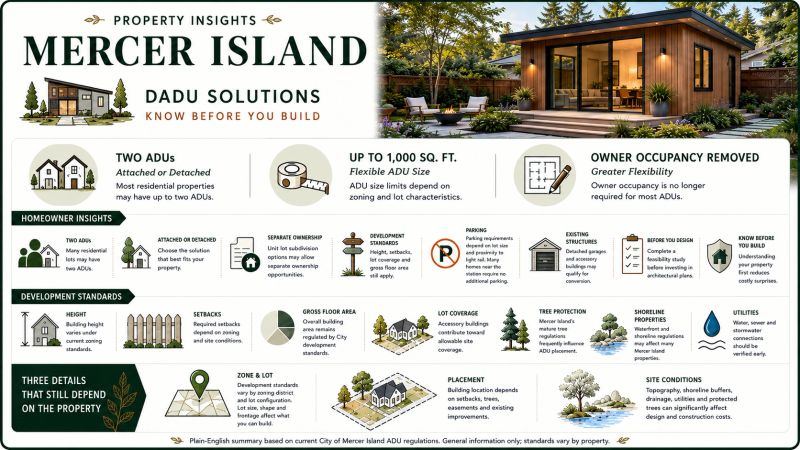
Greater Flexibility for Mercer Island HomeownersMany qualifying residential properties can now accommodate up to two ADUs, giving homeowners the flexibility to build an attached ADU, a detached backyard cottage, or a combination of both where permitted.
Larger ADUs with More Design OptionsMercer Island now allows ADUs up to 1,000 square feet, providing significantly more design flexibility than in previous years. Whether you're planning a comfortable one-bedroom cottage or a spacious two-bedroom layout, understanding allowable size early in the planning process helps ensure your project aligns with current City development standards.
Owner Occupancy Is No Longer RequiredRecent housing reforms have removed owner-occupancy requirements for most ADUs, giving homeowners greater flexibility to use their property while expanding housing opportunities throughout the community. This change allows many homeowners to consider ADUs as both a lifestyle improvement and a long-term investment.
Trees and Shoreline Regulations MatterOne feature that makes Mercer Island different from many neighboring cities is the importance of preserving its natural environment.
Many properties are affected by:
- Mature tree preservation requirements
- Shoreline regulations
- Steep slopes
- Drainage considerations
- Sensitive environmental areas
These property-specific factors often have a greater impact on design and construction costs than zoning regulations alone.
Existing Structures May Offer New OpportunitiesMany Mercer Island properties include detached garages or existing accessory buildings that may be suitable for conversion into an ADU. Converting an existing structure can often reduce construction costs while preserving the established character of your property. Existing buildings must still comply with current structural, energy, fire, and life-safety codes.
Every Property Has Unique Development StandardsAlthough Mercer Island has adopted more flexible ADU regulations, development standards continue to shape every project.
Understanding these requirements before beginning architectural design helps create a smoother permitting process.
Start with a Feasibility StudyOne of the most common mistakes homeowners make is investing in architectural drawings before fully understanding their property's development potential
Our feasibility study evaluates zoning, setbacks, utilities, easements, drainage, tree impacts, shoreline restrictions, and anticipated construction considerations before design begins. This process provides a clear understanding of what can realistically be built while reducing the likelihood of expensive redesigns later in the project.
Know Before You BuildAt DADU Solutions, we believe every successful ADU project begins with understanding the property before designing the building.
Our feasibility-first approach gives homeowners the information they need to make confident decisions before investing in architectural plans. By identifying opportunities and constraints early, we help create a smoother path from feasibility to permitting—and ultimately to a successful ADU project.
Know Before You Build.
In The News
News Article
News Article